

Once you have decided to learn Italian in Italy, another important question quickly follows: how intensive should your course be?
Should you spend several hours a day in class, making language learning the main focus of your stay? Or would you prefer a more relaxed program that leaves plenty of time to explore Italy, meet people, enjoy cultural activities and practise Italian naturally outside the classroom?
There is no single correct answer. The best Italian language courses in Italy are not necessarily the ones with the highest number of lessons. What matters is finding the right balance between structured study, real-life practice and the experience you personally want to have during your time in Italy.
For some students, an intensive program provides exactly the structure and momentum they need. For others, fewer classroom hours combined with cultural immersion can produce a more enjoyable – and sometimes even more effective – learning experience. Understanding the difference can help you choose a course that fits not only your linguistic goals, but also your personality, schedule and expectations.
First, think about why you want to learn Italian

The right level of intensity depends largely on your objective.
If you need Italian for university, work, an examination or a specific professional project, you may want to make rapid and measurable progress. In that case, an intensive Italian course can give you more structured learning time and greater continuity.
Perhaps, however, your motivation is different. You may want to communicate more comfortably during your travels, reconnect with Italian family roots, discover Italian culture or simply spend a rewarding period abroad doing something you have always wanted to do.
In that case, progress still matters, but it may not need to dominate every hour of your stay. Many adult learners choose to study Italian in Italy because they want the language to become part of a broader personal experience. They want to learn in the morning, but also have time to visit a market, go to an exhibition, sit in a cafe, join an excursion or simply listen to Italian being spoken around them.
Before choosing the number of lessons, therefore, ask yourself what success would look like at the end of your stay. Would you like to move through a language level as quickly as possible? Or would you rather return home feeling more confident speaking Italian and having experienced the country more deeply? Your answer will help determine the right pace.
When an intensive Italian course makes sense
An intensive course can be particularly effective when your time in Italy is limited but your objectives are ambitious.
If you only have one or two weeks and want to maximise your classroom exposure, additional lessons can help you consolidate grammar, expand vocabulary and receive more frequent feedback from your teachers.
An intensive format also works well for students who enjoy a structured learning routine. Some people make better progress when they know that a significant part of each day is dedicated to studying Italian and when one lesson builds directly on the previous one.
The additional contact time can also be helpful at intermediate and advanced levels, when students often want to work more deeply on accuracy, fluency and more complex forms of expression.
But intensity should not be confused with simply doing more exercises. A good intensive program still needs variety, communication and active participation. Spending more hours in class is valuable only if those hours give you meaningful opportunities to use Italian. The aim should not be to leave class exhausted. It should be to create enough continuity for the language to remain active in your mind throughout the day.
When a more relaxed course may be the better choice
A less intensive course does not mean taking language learning less seriously.
For many students, particularly adults taking a language holiday, a balanced schedule can actually encourage more effective immersion.
Imagine spending the morning in class and then having the afternoon free to explore the city. You might order lunch in Italian, visit a local market, talk to someone in a shop, join a cultural activity or simply observe how people communicate around you. All of these situations reinforce what you have learned.
Language acquisition does not happen exclusively in the classroom. When you are studying in the country where the language is spoken, everyday life becomes an enormous additional learning resource.
A more relaxed course can therefore be ideal if you want to combine study with culture, travel and social experiences, or if you simply know that you learn better when you have time to absorb and process new information. This can be especially important if your stay lasts several weeks. Maintaining motivation over time is often easier when learning has a sustainable rhythm.
The classroom is only one part of your Italian course

One of the greatest advantages of choosing Italian language courses in Italy is that the distinction between study time and free time gradually becomes less clear.
After class, you are still surrounded by Italian. You hear it while walking through the streets, ordering coffee, reading menus, watching television, visiting museums or speaking with local people. Even small interactions provide opportunities to recognise vocabulary, test expressions and develop listening skills.
This is why the number of classroom hours alone is not always the best way to judge the intensity of a language experience. Three hours of lessons followed by several hours of genuine interaction in Italian can create an extremely rich learning day.
The key is to use your environment actively rather than retreating immediately into your native language. The most effective immersion often happens when structured lessons and everyday experiences support each other.
Take Italian beyond the classroom with our Italian Plus Experiences and combine language study with authentic cultural experiences in Italy.
Think about your own learning style
Students do not all respond to the same pace in the same way.
Some learners enjoy concentration and intensity. They like new vocabulary, grammar and communication tasks coming one after another and feel motivated by seeing rapid progress.
Others need more time to process what they have learned. After a morning lesson, they benefit from walking around the city, revisiting their notes later or simply hearing the language naturally before returning to class the next day.
Neither approach is superior. When choosing an Italian language course in Italy, think honestly about how you normally learn best.
If long periods of formal study leave you mentally tired, choosing the most intensive course simply because it appears more serious may be counterproductive. On the other hand, if you are highly motivated and enjoy structured learning, you may feel that a standard course does not challenge you enough. Your course should work with your learning habits rather than against them.
Group lessons, private lessons or both?

Course intensity is not only about the number of hours. It is also about how those hours are used.
Group lessons provide something particularly valuable in language learning: interaction. You communicate with different people, hear different ways of expressing ideas and learn to negotiate meaning when communication is not perfect.
Private lessons offer a different kind of intensity. Because the teacher can focus entirely on your needs, a relatively small number of individual lessons can be extremely productive.
For this reason, combining group and individual tuition can offer an excellent middle ground. You can enjoy the social and communicative benefits of the group while using private lessons to focus on specific objectives such as pronunciation, grammar, conversation or professional language. This is often a good solution for students who want to accelerate progress without turning their entire day into classroom study.
Consider the length of your stay
A course that is appropriate for one week may not be ideal for two months.
If you are coming to Italy for a short period, a more intensive schedule can help you make the most of limited time. You may be happy to dedicate much of your stay to language study because your main objective is rapid progress.
During a longer stay, however, sustainability becomes more important. Language learning requires concentration, and giving yourself enough time to rest, socialise and experience daily life can help you maintain enthusiasm over several weeks or months.
A longer stay also naturally increases your exposure to Italian, so you may not need to maximise classroom hours every day. This is one reason why the best course choice should always consider both weekly intensity and total duration.
Sometimes two or three weeks at a balanced pace can offer more lasting benefits than a very intensive week followed by no further exposure.
Catania and Como: two settings, two different rhythms

The destination itself can also influence the way you want to organise your studies.
In Catania, the city naturally encourages interaction. Its markets, cafes, historic streets, Mediterranean lifestyle and strong local identity make everyday exploration part of the experience. After morning classes, there are countless opportunities to encounter Italian in spontaneous situations or to discover Sicily through food, culture and excursions.
A balanced course can leave time to make the city part of your language learning.
Como offers a different atmosphere. The historic centre, Lake Como, surrounding landscape and proximity to Milan create opportunities to combine study with walking, cultural visits, excursions and a more relaxed northern Italian lifestyle.
For some students, this peaceful environment creates the ideal conditions for concentrated study. For others, it provides exactly the right setting for combining morning lessons with afternoons spent exploring the lake and surrounding towns.
The question is not whether Catania or Como is more suitable for an intensive or relaxed course. It is which environment best supports the kind of learning experience you want.
Don’t confuse relaxed with unstructured
A well-designed standard course should still provide clear progression, qualified teaching and regular opportunities to practise all language skills.
Likewise, a good intensive course should not simply add extra hours without a clear educational purpose.
Whichever format you choose, look at the quality of the school as well as the timetable. The teaching method, teacher expertise, class environment, placement procedures and academic support all influence how much you actually gain from your course.
A professional language school should help you find a program appropriate to your level and objectives rather than automatically encouraging you to choose the largest number of lessons. Ultimately, course intensity is only one element of quality.
Find your own balance between studying and living Italian
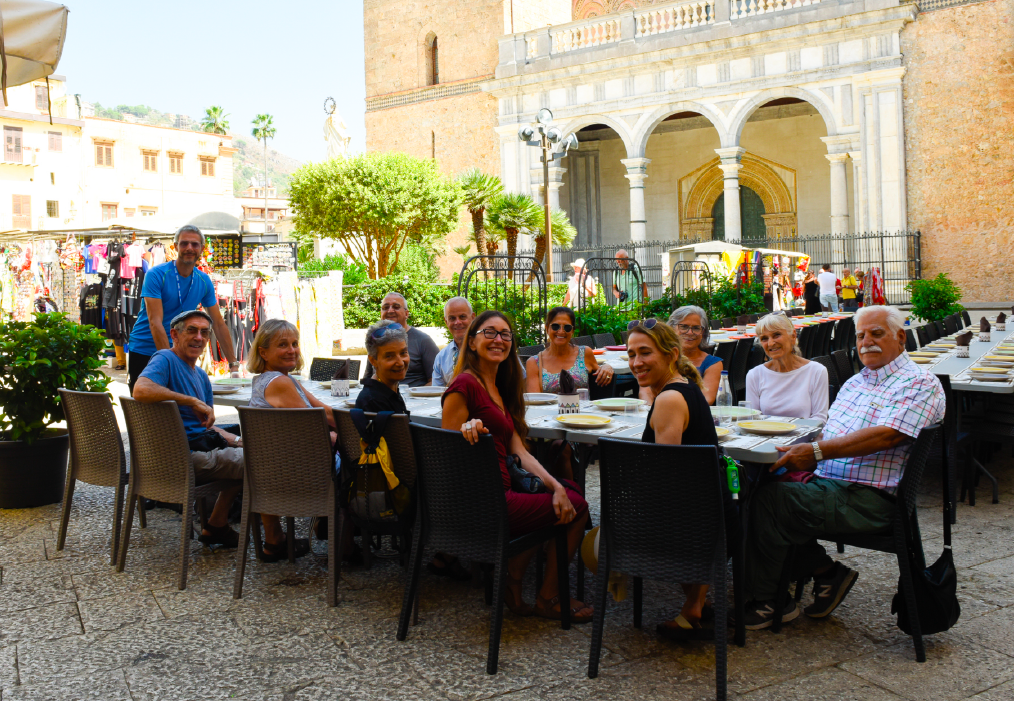
Perhaps the most useful way to think about the choice is not intensive or relaxed, but: What balance will help me learn best?
You may want Italian to be the central purpose of your trip, with a demanding academic schedule and clear progression goals. Or you may want the morning classroom to give structure to an experience in which the rest of the day is spent discovering Italy.
Both can be genuine immersion. What matters is that Italian remains present throughout your day – sometimes through structured lessons, sometimes through conversation, observation, culture and everyday life.
The best Italian language courses in Italy are those that give you enough structure to make progress while leaving you the right amount of space to turn what you learn into real communication.
Because ultimately, learning Italian in Italy is not a choice between studying the language and enjoying the country. The most rewarding experience is often finding the right way to do both.
Discover our Italian language courses in Italy with TEAM LINGUE – International House and choose the learning experience that suits you best in Catania or Como.
FAQs – Intensive vs. Relaxed Italian Language Courses in Italy
Is an intensive Italian course better than a standard course?
Not necessarily. An intensive course can help you progress faster if you have limited time or specific goals, while a standard course may provide a better balance between classroom learning and real-life immersion. The best option depends on your objectives and learning style.
How many hours a day should I study Italian?
There is no ideal number for everyone. Some students benefit from several hours of structured lessons each day, while others learn effectively through a combination of morning classes and informal practice outside school.
Can I learn Italian with only a few hours of classes per day?
Yes. Especially when studying in Italy, learning continues outside the classroom. Everyday conversations, cultural activities and daily exposure to Italian can significantly reinforce your formal lessons.
Are intensive Italian courses suitable for beginners?
Yes, provided the course is designed for the student’s level. Complete beginners can benefit from intensive study, although some may prefer a more gradual pace during their first experience with the language.
What is the best course format for a one-week stay?
If your priority is making maximum linguistic progress during a short stay, an intensive course can be a good choice. If you also want substantial time to explore the destination, a standard course may provide a better balance.
What is better for a long-term Italian course?
For longer stays, sustainability becomes important. Many students prefer a balanced timetable that provides regular structured learning while leaving enough time for independent study, cultural activities and everyday interaction.
Can I combine group classes with private Italian lessons?
Yes. Combining the two can be an effective way to increase intensity without spending the entire day in class. Group lessons offer communication and interaction, while private lessons allow you to focus on individual needs.
Is studying Italian in Italy more intensive than studying at home?
It can be, even with the same number of classroom hours. In Italy, you are continuously exposed to the language in daily life, so cafes, shops, public transport, activities and conversations all become part of your learning environment.
Should I choose Catania or Como for my Italian course?
Both offer excellent opportunities to learn Italian but provide different experiences. Catania offers a vibrant Mediterranean atmosphere and strong Sicilian identity, while Como combines a more relaxed northern Italian setting with Lake Como and proximity to Milan. Your choice should reflect the lifestyle you would most enjoy during your stay.
How do I know which Italian course intensity is right for me?
Consider your main objective, length of stay, previous language-learning experience, preferred study rhythm and how much time you want for cultural activities. The best course is the one you can follow with motivation and consistency while still enjoying the wider experience of living in Italy.