
Learn Italian in Catania, Sicily
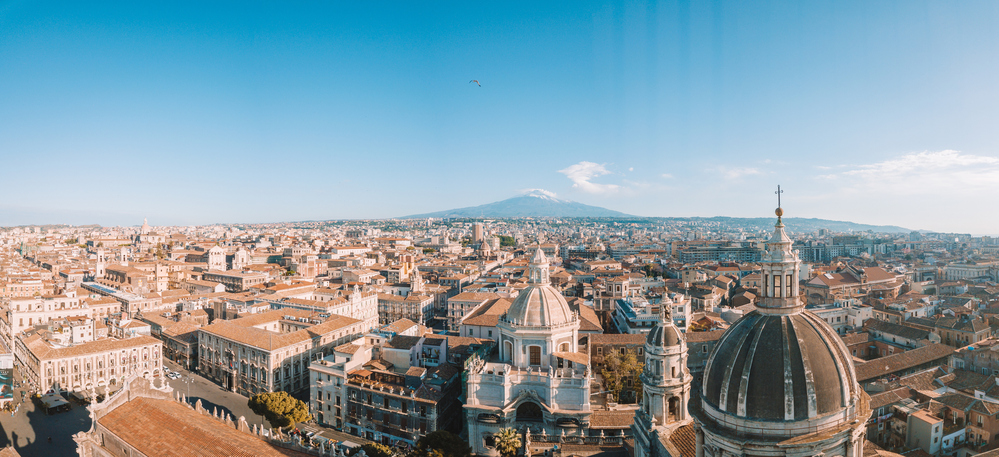
10 good reasons to study here
If you’re searching for the best way to learn Italian in Sicily, Catania offers something rare: a real Italian city with a powerful Mediterranean identity, deep cultural roots, and constant opportunities to practice Italian in everyday life.
Here, language learning happens not only in the classroom but also in cafés, markets, streets, theatres, beaches and conversations with locals.
And yes — it’s the city where you can go from the volcano to the sea on the same day.
1. The Mediterranean soul (authentic, not touristy)
Catania is intense, chaotic, warm, creative and profoundly authentic. Here, the Mediterranean is more than a place on the map – it is a way of being: expressive communication, strong social bonds, humor, spontaneity and emotional openness.
You will hear Italian everywhere: in lively street conversations, market negotiations, friendly banter between neighbors, and passionate discussions about food, football, or politics.
If you want to experience Italy beyond postcard stereotypes and practice real everyday Italian, Catania immerses you instantly in authentic communication.
2. From Mount Etna to the sea (in one day)
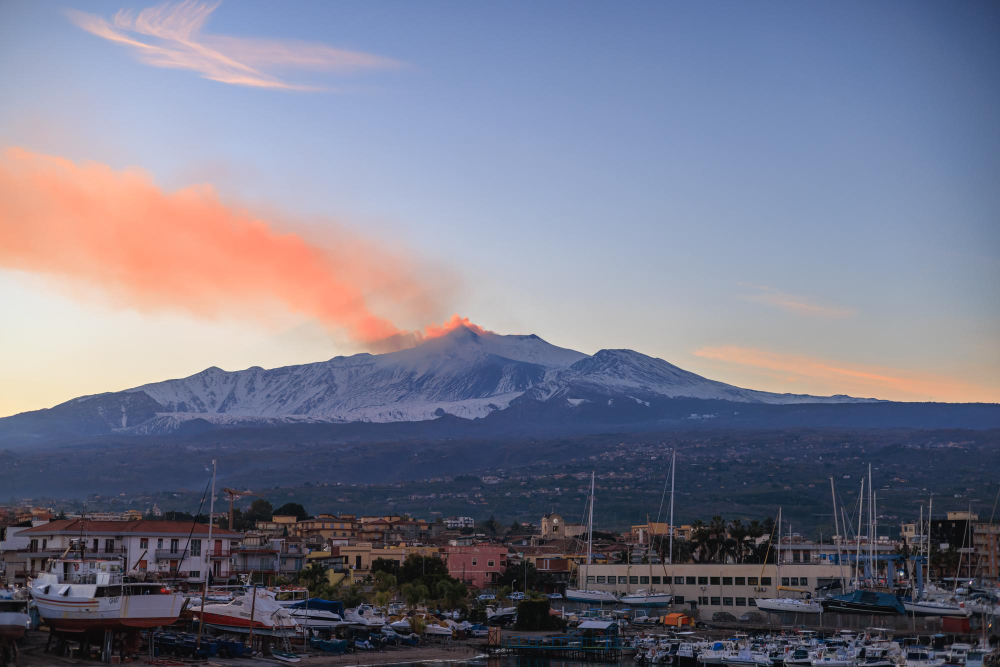
Few places in Europe offer such dramatic geography. Catania lies at the foot of Mount Etna – Europe’s highest active volcano – and directly on the coast.
In a single day, you can:
- explore volcanic landscapes
- walk through lava fields
- relax on sandy or rocky beaches
- watch spectacular sunsets over the Ionian Sea
Etna is not just scenery – it shapes local identity, mythology and daily life. Locals even call it “a Muntagna” (“the Mountain”), as if it were a living presence.
3. A UNESCO Baroque city of lava stone
After the devastating earthquake of 1693, Catania was rebuilt in a magnificent Sicilian Baroque style, now recognized as a UNESCO World Heritage site.
Unlike other Baroque cities built from pale stone, Catania’s architecture is largely made of dark volcanic basalt. This creates a striking contrast between black lava stone, white decorative elements and the intense blue Sicilian sky.
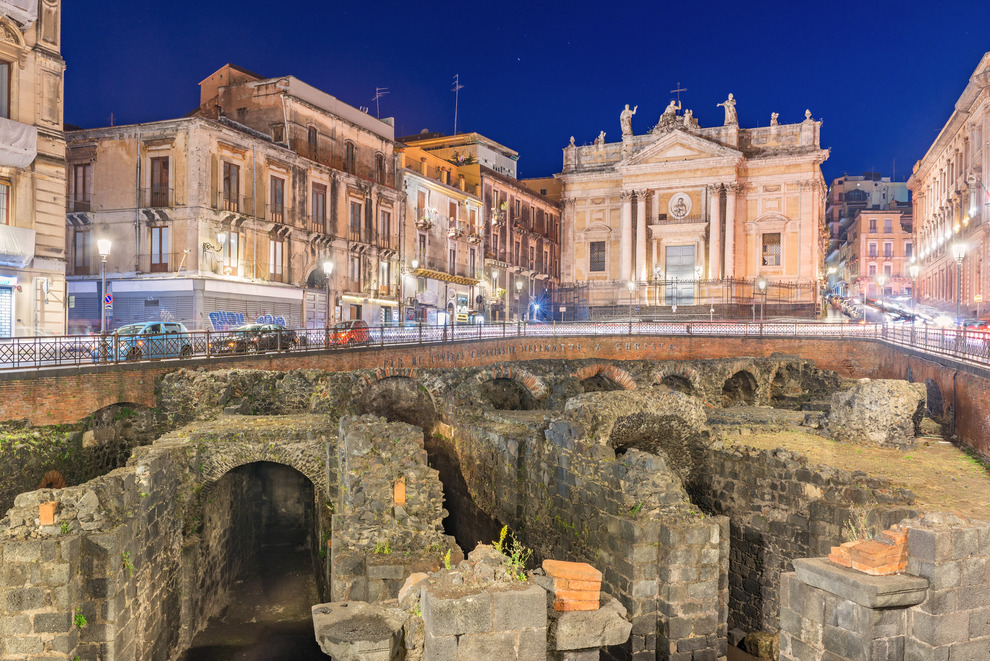
Strolling through the city center is like journeying through layers of history: Greek foundations, Roman remains, medieval structures and Baroque palaces – all within a compact, walkable area.
4. A lively university city
Catania is home to one of the oldest universities in Italy, founded in 1434. With tens of thousands of students, the city has a youthful energy that keeps it vibrant throughout the year.
For language learners, this means:
- lively cafés and public spaces
- affordable restaurants and bars
- constant cultural activity
- opportunities to meet people from different backgrounds
Unlike purely tourist destinations, Catania functions as a real city – and that makes practicing Italian easier and more natural.
5. Nightlife and social life
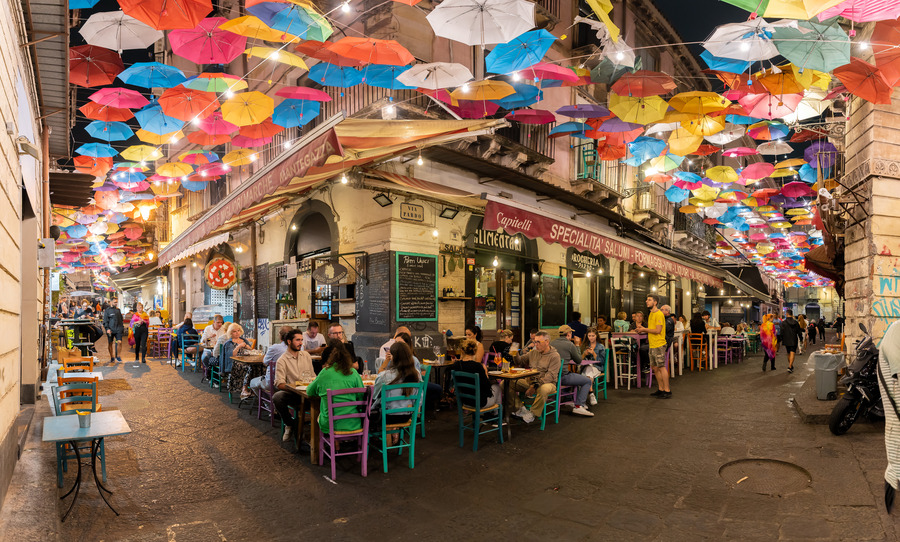
Catanese people are known for their sociability. Eating together, chatting outdoors, meeting friends late in the evening – social interaction is central to daily life.
The city offers:
- lively “piazzas” filled with people at night
- bars and live music venues
- informal street gatherings
- aperitivo culture with a local twist
For language learners, this environment offers endless opportunities for spontaneous conversation, which is often the most effective way to gain confidence.
6. Cinema, theatre and literature
Catania has long been a cultural powerhouse. It is the birthplace of major writers such as Giovanni Verga and has inspired numerous works of Italian literature.
The city also boasts one of the highest theatre densities in Sicily, as well as cinemas and summer open-air movie arenas where locals gather in the evenings.
Culture here is not confined to museums – it is part of everyday urban life, offering constant exposure to authentic language and storytelling traditions.
7. Music and concerts (the city of Bellini)
Catania is the birthplace of Vincenzo Bellini, one of Italy’s most celebrated opera composers. The Teatro Massimo Bellini hosts opera, symphonic concerts and cultural events throughout the year.
At the same time, the city has a vibrant contemporary music scene – from jazz festivals to indie rock heritage – a legacy that led to its nickname, the “Seattle of Italy”.
Whether you love classical music or modern sounds, Catania offers abundant opportunities to immerse yourself in Italian culture through music.
8. Museums, historic sites and layered history
Catania’s long history – from Greek colony to Roman city, medieval stronghold and Baroque capital – is visible everywhere.
Highlights include:
- Greek theatre and Roman amphitheatre
- medieval castles
- archaeological museums
- historic palaces
- university collections
- contemporary exhibitions
This historical depth makes the city a living classroom, where learning Italian naturally intertwines with culture, art, and identity.
9. Tradition, myth and folklore
Catania’s traditions are intense and deeply felt. The Feast of Saint Agatha in February is one of the largest religious festivals in Europe, attracting hundreds of thousands of participants.
The city is also rich in myths and legends:
- Etna as the forge of the god Vulcan
- the Cyclops Polyphemus from Homer’s Odyssey
- ancient stories of heroes and saints
Participating in these traditions offers insight into Sicilian identity and creates unforgettable language-learning moments.
10. Food culture and daily markets (the real Sicily)
In Sicily, food serves as social glue, and Catania is a paradise for food lovers.
Local specialties include street food like arancini and cipolline, as well as dishes such as pasta alla Norma, fresh seafood, and traditional pastries.
The heart of this culture is La Pescheria, the daily fish market near Piazza Duomo. Loud, colorful, theatrical and intensely local, it is one of the best places to observe authentic Sicilian communication in action.
Learning Italian here means learning vocabulary with all five senses
Why Catania is a smart base to learn Italian in Sicily
Catania is not only fascinating in itself – it is also a strategic gateway to the rest of Sicily.
From here, you can easily explore:
- Mount Etna
- Taormina
- Syracuse
- the Valley of the Temples
- coastal villages and natural reserves
With an international airport, railway connections and motorway network, Catania combines authenticity with accessibility.
If you want to combine real-life immersion, cultural richness and daily opportunities to practice Italian, Catania is one of the most rewarding destinations in Italy.
FAQ – Frequently Asked Questions
Is Catania a good place for learning Italian in Sicily?
Yes. Catania is one of the most authentic places to learn Italian in Sicily. It is a real, lived-in city, where you hear Italian constantly: in shops, markets, cafés, public transport and everyday interactions.
Unlike purely tourist destinations, Catania offers continuous exposure to natural spoken Italian, making it ideal for developing real communicative skills.
Why take an Italian course in Sicily?
Sicily offers a unique combination of history, culture, landscapes and traditions that transforms language learning into a full cultural experience.
Studying Italian here means learning in a place shaped by centuries of Greek, Roman, Arab, Norman and Spanish influences. Every street, monument, festival and dish tells part of the island’s story, turning Sicily into a kind of “living textbook”.
Beyond the classroom, everyday interactions with locals provide invaluable opportunities to practice Italian and understand how the language is actually used.
What makes Italian language schools in Sicily stand out?
Italian language schools in Sicily often focus strongly on cultural immersion, personal attention and real-life communication.
At accredited institutions such as our Italian school in Catania, students benefit from:
- High academic standards
- Qualified native teachers
- Small class sizes
- Courses starting regularly throughout the year
- Integration of language learning with cultural experiences
Being part of the International House World Organisation is an additional guarantee of quality. IH schools are regularly inspected by independent bodies to ensure consistent standards worldwide.
How is the Italian language spoken in Sicily? Will people speak dialect?
Many students worry about this, but there is no need.
Standard Italian is spoken everywhere in Sicily, especially in cities and in all situations involving visitors or people from other regions. Schools teach and use standard Italian, the same language used throughout Italy.
Like all regions, Sicily also has its own local language (Sicilian dialect). However:
- it is mainly used among locals
- it varies from area to area
- it is rarely used with foreigners
- most people switch automatically to standard Italian
Italians grow up in a form of bilingualism: standard Italian alongside a regional dialect. As a student, you will learn standard Italian –and may occasionally hear dialect as part of the cultural experience.
How do I choose the right Italian course in Sicily?
Start by considering:
- Your current level
- Your learning goals (travel, work, culture, exams)
- The amount of time you have
- Your preferred pace and learning style
If your goal is rapid progress, choose an intensive course with daily lessons and immersion activities. If you prefer a slower pace, a standard course might be a better fit.
Also check:
- Accreditation of the school
- Class size
- Teaching method
- Support services and activities
What is your school in Catania known for?
Our Italian department in Catania is known for combining academic quality with authentic cultural immersion.
We offer courses for all levels – from absolute beginners to advanced learners – and focus on helping students use Italian confidently in real-life situations.
Students particularly value the balance between structured teaching and meaningful experiences outside the classroom.
When do Italian courses start, and what options are available?
Courses start regularly throughout the year, offering flexibility for students with different schedules.
Options typically include:
- Intensive courses
- Standard courses
- One-to-one lessons
- Cultural immersion programs
- Specialised courses
Can I combine Italian classes with culture and activities?
Yes – combining classroom learning with real-life experiences is one of the most effective ways to learn a language.
Our social activity program includes guided visits, excursions, social events and opportunities to interact with native speakers in authentic contexts.
How does immersion in Sicily improve language learning?
Immersion means being surrounded by the language throughout the day –not only during lessons.
In Sicily, students can:
- Practice Italian in everyday situations
- Become familiar with natural speech patterns
- Gain confidence quickly
- Understand cultural nuances
Many learners find that immersion leads to faster progress, better pronunciation and more natural communication skills.
Is it easy to explore Sicily from Catania?
Yes. Catania serves as a major transport hub in eastern Sicily, offering an international airport, railway connections, and motorway access.
From the city, you can easily visit Mount Etna, Taormina, Syracuse, coastal villages and archaeological sites – making it an excellent base for discovering the island while studying Italian.
Are you the best Italian language school in Italy?
We cannot say whether we are the “best” Italian language school in Italy – and it would be presumptuous to claim so.
What we can say with confidence is that we are among the most accredited Italian language schools, with numerous national and international recognitions.
Accreditation is not a marketing label: it means undergoing regular inspections by independent external bodies. These inspections evaluate teaching quality, organization, student services and professional standards.
For students, this represents a concrete guarantee of reliability and effectiveness. Quality education requires qualified staff, proper facilities, and continuous monitoring – and this inevitably has a cost.
When choosing a language school, it is worth considering not only price but also the value and security that accreditation provides.