

Choosing the right Italian language course can shape your entire experience abroad. With so many learn Italian classes available – from group and private lessons to intensive and immersion programs – it is easy to focus only on price, timetable or location. But two courses that look similar on paper can offer very different learning experiences.
The best Italian classes are not necessarily the longest, the cheapest or the most intensive. They are the ones that match your level, your goals, your learning style and the kind of relationship you want to build with the language. Before you book, it is worth looking beyond the course description and asking what will actually help you make progress and enjoy the experience.
Start with your real reason for learning Italian
The first question is simple: why do you want to learn Italian? Your answer should guide almost every other decision you make.
You may want to communicate more confidently while travelling, connect with Italian family or friends, use Italian for work or university, or simply deepen your relationship with a culture you love. Perhaps your priority is conversation, or perhaps you need to consolidate grammar, prepare for an exam or progress quickly from your current level.
Different goals require different approaches. If speaking is your priority, look for classes in which communication and interaction are central rather than courses dominated by explanation and written exercises. If you have a specific academic or professional objective, a more structured program – possibly combining group lessons with individual tuition – may be more appropriate. The clearer your goal, the easier it is to choose the right course.
Look at how Italian is taught, not only at what is taught

Almost every language school teaches grammar, vocabulary, listening, speaking, reading and writing. What really makes the difference is how these skills are developed in class.
A communicative approach places the learner at the centre of the lesson. Grammar remains important, but it becomes a tool for communication rather than the final objective. Students are encouraged to interact, exchange opinions, solve tasks and use Italian in situations that reflect real life.
When you learn Italian in Italy, this approach is especially valuable because the classroom and everyday life can reinforce one another. What you practise in the morning can be used in a café, shop, market or conversation later the same day. A good course should gradually make you more confident and independent outside the classroom.
Choose the right intensity for you
More lessons do not automatically mean better learning. An intensive Italian course can be an excellent choice if you have limited time, want to make rapid progress or have a specific objective. But the ideal intensity also depends on your energy, learning habits and plans outside class.
When studying abroad, time outside school is part of the learning process too. A morning course followed by an afternoon spent exploring the city, speaking with locals and joining cultural activities can be extremely productive. Other learners prefer a fuller academic schedule and benefit from additional lessons.
The important point is to choose a rhythm that you can sustain. The best program gives you enough structured study to progress while leaving enough space to actually live and use the language.
Group lessons, private tuition or both?
Group classes offer something that individual tuition cannot fully reproduce: interaction with other learners. You hear different ways of expressing ideas, negotiate meaning, take part in conversations and learn in a social environment. For many students, this makes the experience more dynamic and motivating.
Private lessons offer a different advantage: the teacher can focus entirely on your needs, weaknesses and goals. They can be particularly useful for pronunciation, grammar, professional language or targeted conversation practice.
For some students, the best solution is a combination of both. Group lessons provide communication and community, while individual tuition allows you to work more deeply on personal priorities.
Think about class size - but also about participation
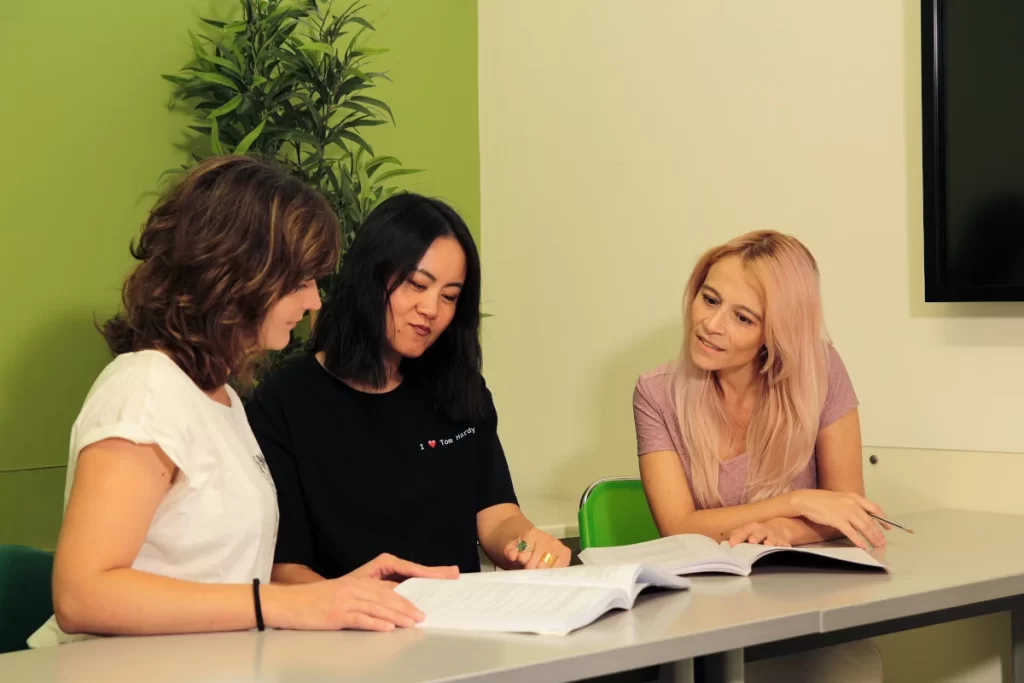
Class size matters because language learning requires active participation. In smaller groups, students generally have more opportunities to speak, ask questions and receive feedback. But the number of students alone does not guarantee a communicative lesson.
What matters most is how the class is organised. A good teacher creates opportunities for pair work, group interaction and meaningful communication so that students are not simply listening. When comparing learn Italian classes, try to understand whether you will be an observer or an active participant.
If you study in Italy, make immersion part of the course
One of the main reasons to study Italian in Italy is that learning does not stop when the lesson ends. Every day offers opportunities to turn classroom knowledge into real communication.
Cultural activities can make this even more powerful. A cooking class, local visit, guided tour or tasting is not only an enjoyable addition to the course: when it is connected to language learning, it gives you an authentic reason to listen, ask questions and interact in Italian.
So do not look only at how many classroom hours a school offers. Look at whether the overall program helps you live the language and discover the culture through it.
Choose a destination that motivates you

Where you study can influence your motivation almost as much as what you study. Italy offers very different lifestyles, landscapes and cultural environments, and the right destination is the one in which you can imagine yourself living – not simply sightseeing.
Catania offers the energy of a Mediterranean city, with street markets, historic neighbourhoods, the sea and Mount Etna forming part of everyday life. It is particularly appealing to students who want a lively, authentic Sicilian experience and frequent opportunities for spontaneous interaction.
Como offers a different side of Italy. Its historic centre, lakefront setting and proximity to Milan, the Alps and Switzerland create a more elegant and relaxed environment. For students who value scenery, a calmer pace and the atmosphere of Northern Italy, it can be an equally inspiring place to learn.
Neither destination is objectively better. The best choice is the one that makes you curious enough to go out, explore and use Italian every day.
Check academic quality and student support
Studying abroad is an investment of both time and money, so it is worth looking beyond attractive photos and promotional promises. Check the school’s experience, teacher qualifications, teaching method, academic standards and professional accreditations.
A serious school should also assess your Italian before placing you in a class. The right level is essential: a course that is too easy can become frustrating, while one that is too difficult can quickly reduce confidence.
The human side matters too. When you arrive in another country, the school often becomes your first point of reference. Helpful staff, supportive teachers and a welcoming international atmosphere can make it much easier to participate, experiment with the language and feel part of a community.
Compare value, not just price
Price is naturally part of the decision, but tuition fees alone do not tell you whether a course offers good value. One program may be cheaper but provide larger classes or fewer services, while another may include stronger academic support, better teaching, cultural activities or practical assistance.
The destination also affects your overall budget, including accommodation, transport, food and leisure. A more useful question than ‘Which course is cheapest?’ is ‘What am I getting from the complete experience?’ Good value comes from the right balance of teaching quality, course structure, destination, support and opportunities to use Italian in real life.
The best Italian classes help you use the language independently

Ultimately, a good Italian course should not simply make you better at completing classroom exercises. It should help you become more confident using the language without the teacher beside you.
The real signs of progress are often simple: ordering lunch without switching to English, understanding something you overhear, having a spontaneous conversation or suddenly realising that you have been speaking Italian without mentally translating every sentence.
There is no single best course because there is no single type of learner. The right learn Italian classes are the ones that give you structure, expert guidance and the confidence to take Italian beyond the classroom. Because the best way to learn Italian is not simply to study it – it is to start living it.
FAQs – Choosing the Best Learn Italian Classes
1. How do I choose the best learn Italian classes for my level?
Choose a school that assesses your current ability before the course begins. Proper placement helps ensure that the class is challenging enough to promote progress without becoming overwhelming.
2. Are group or private Italian classes better?
Both can be effective. Group classes provide interaction and a social learning environment, while private lessons allow the teacher to focus entirely on your personal needs. A combination of the two can offer the advantages of both formats.
3. How many hours of Italian should I study per week?
It depends on your goals and available time. Intensive courses are useful for faster progress, while a lighter schedule leaves more time for real-life practice. When studying in Italy, both classroom learning and daily exposure contribute to improvement.
4. Can I take Italian classes in Italy as a complete beginner?
Yes. Italian language schools generally offer courses for complete beginners as well as more advanced levels. You do not need previous knowledge of Italian to start.
5. Is it better to learn Italian in Italy than at home?
Studying in Italy gives you continuous exposure to the language. You can immediately use what you learn in shops, cafés, markets and everyday conversations, making practice a natural part of your day.
6. How long should I study Italian in Italy?
Even one or two weeks can build confidence, while longer stays usually allow deeper progress. The result also depends on your starting level, learning goals and how actively you use Italian outside class.
7. What should I look for in an Italian language school?
Look at teaching methods, teacher qualifications, class size, level assessment, academic standards, accreditations and student support. If you are studying in Italy, also consider the opportunities for cultural and linguistic immersion.
8. Are cultural activities useful for learning Italian?
Yes. Well-designed cultural activities create authentic situations in which you can hear and use the language. They can turn vocabulary and classroom knowledge into real communication while helping you understand Italian culture more deeply.
9. Is Catania or Como better for learning Italian?
Both offer strong learning environments but very different lifestyles. Catania is ideal for those attracted to Mediterranean Sicily and a lively urban atmosphere, while Como offers Lake Como, Northern Italian culture and a calmer setting. The best choice depends on the experience you want.
10. How can I tell whether an Italian course offers good value for money?
Compare more than the tuition fee. Consider teaching quality, lesson structure, class size, academic support, cultural activities, student services and the cost of living in the destination. The best value is the course that best matches your goals.